Back
One solid face, one braided linen cable. Nothing to hide.
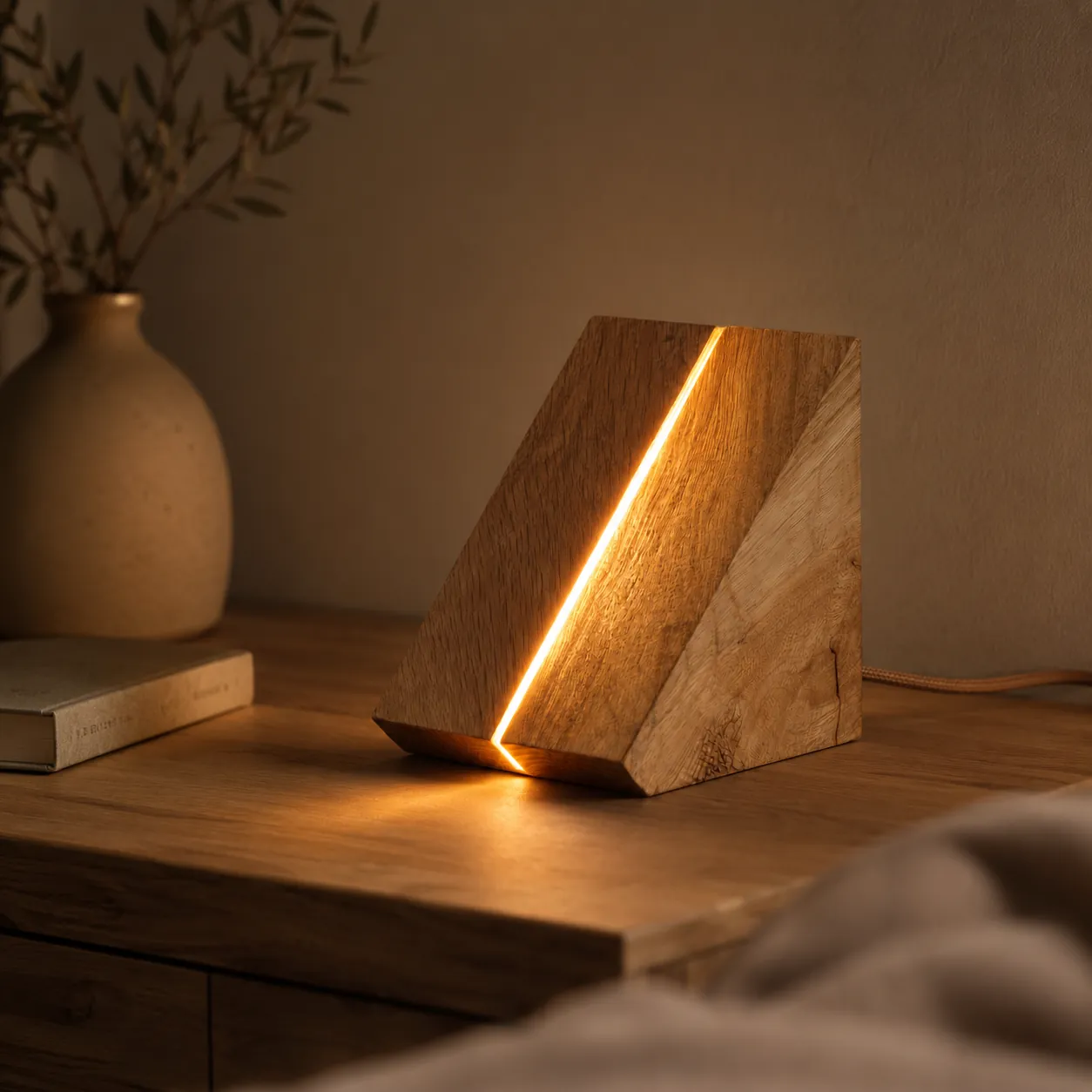
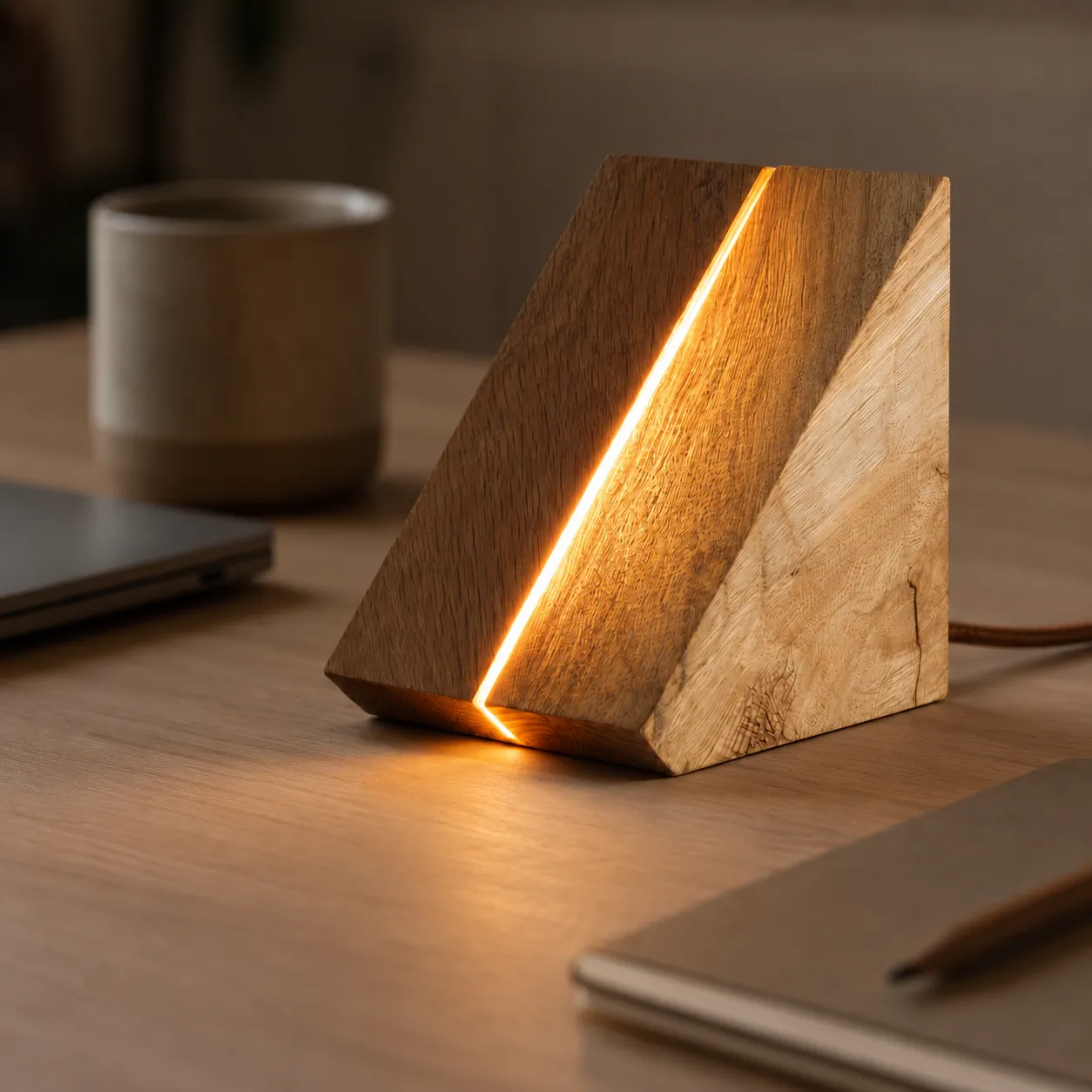
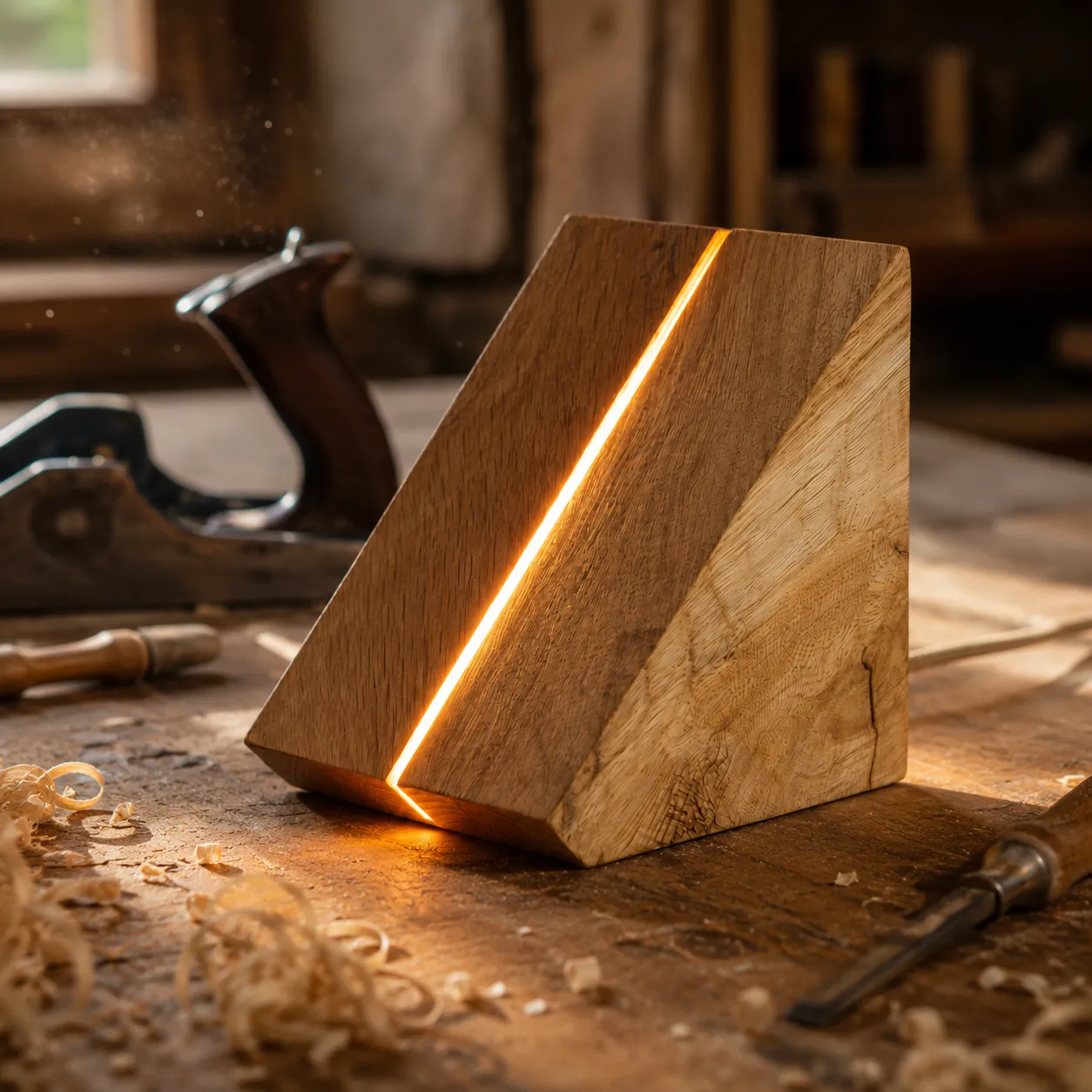
Light escapes from the fault.
Come closer. Walk around it.
One solid face, one braided linen cable. Nothing to hide.
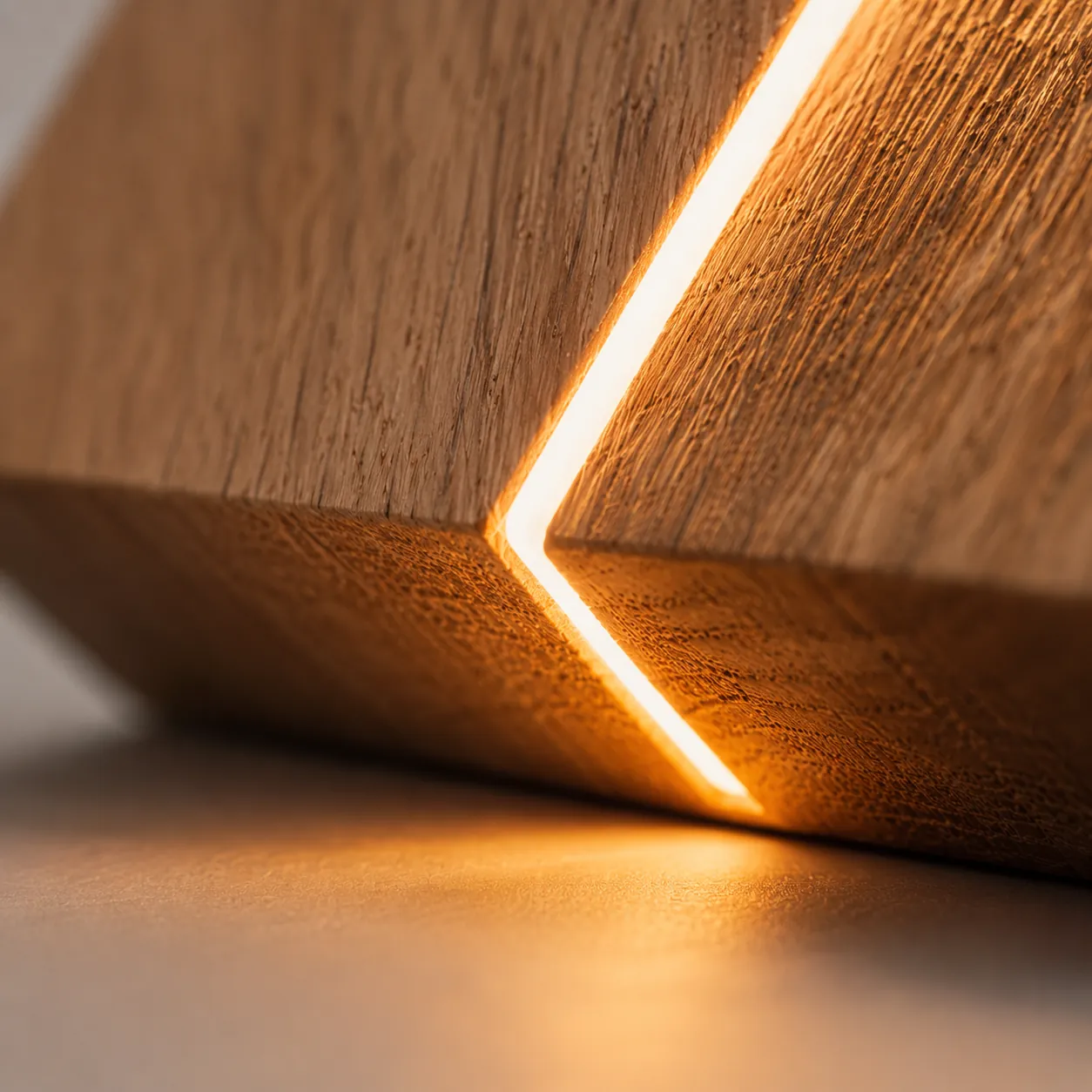
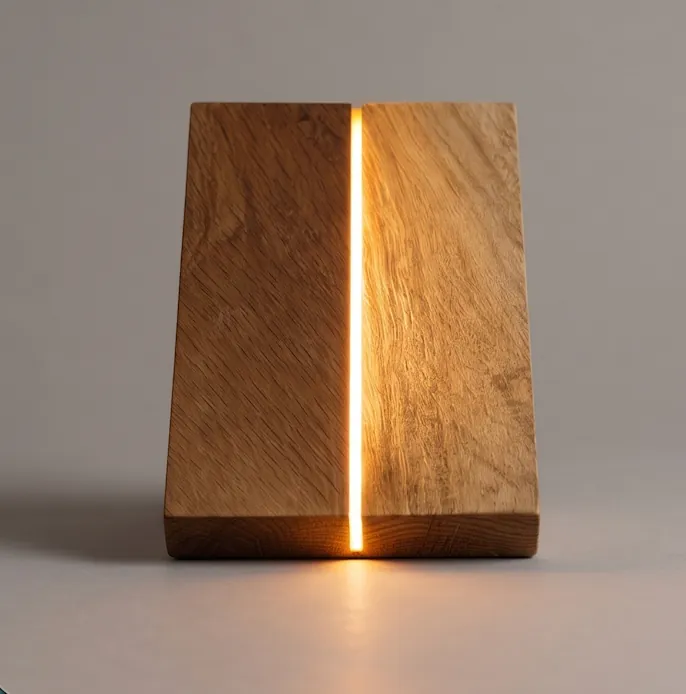
The cut splits the slope in two. The light never spills.
Five-eighths of an inch wide, held to the hundredth. The raw wall catches the halo.
The block is one. The grain crosses the fault and picks up again, edge to edge.
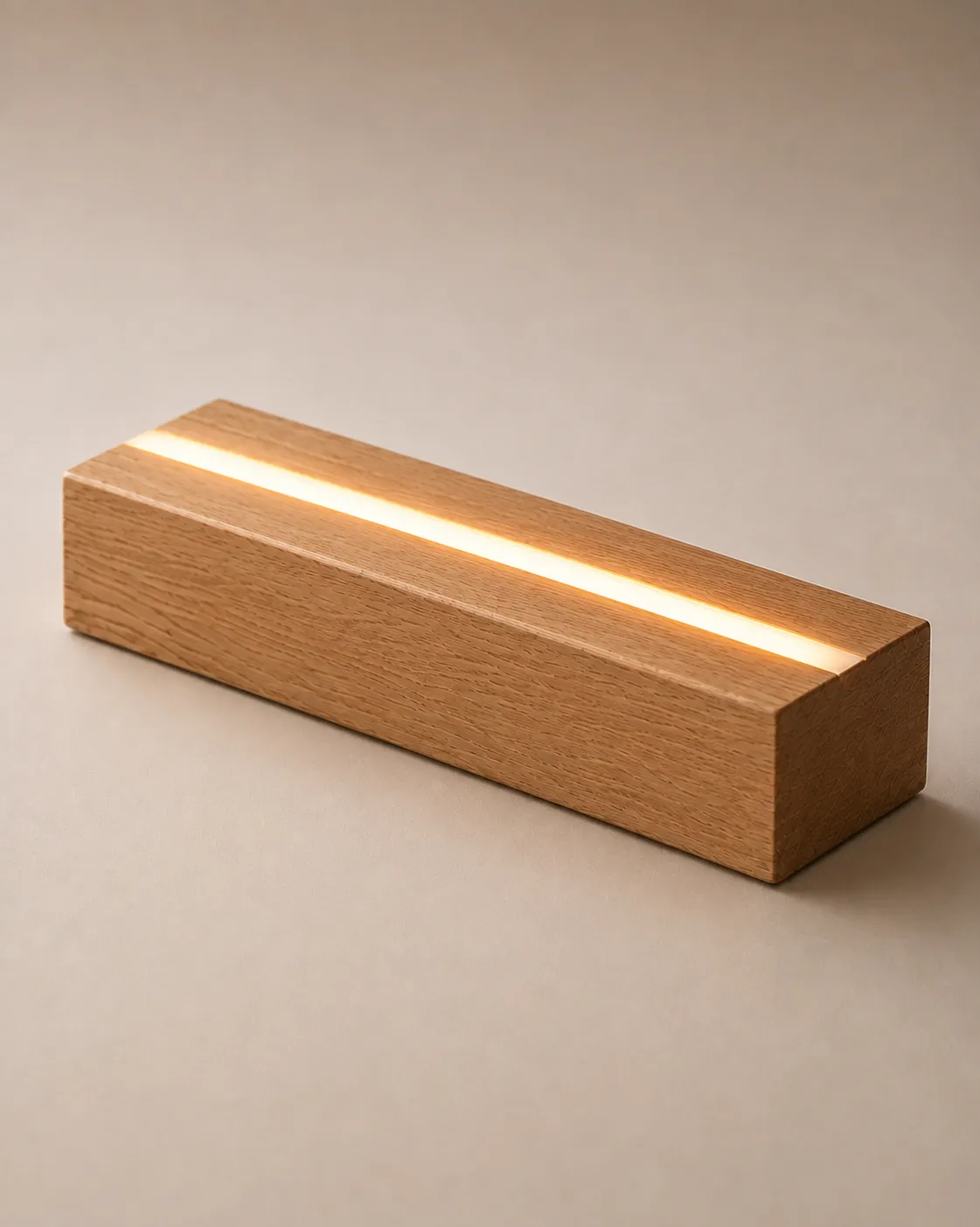
A prism of solid oak, split by a single clean cut along its slope. Inside the fault, a line of warm LED: the light escapes and settles across the table in a fan. La Faille is a drawing before it is an object. Charles Dermon looked for the exact ratio between the slope, the height of the base and the width of the cut, until the light held the table without ever hitting the eye. The block is solid oak, chosen for its grain: it crosses the fault and picks up again on the other side, at the same height, with no veneer and no joint. Inside, a line of LED rated for fifteen thousand hours.
Solid oak, dried before machining. No veneer, no joint: the grain enters one side of the fault and comes out the other, in one elegant continuity. That is the proof the block is one, and the reason no two pieces of La Faille are alike.
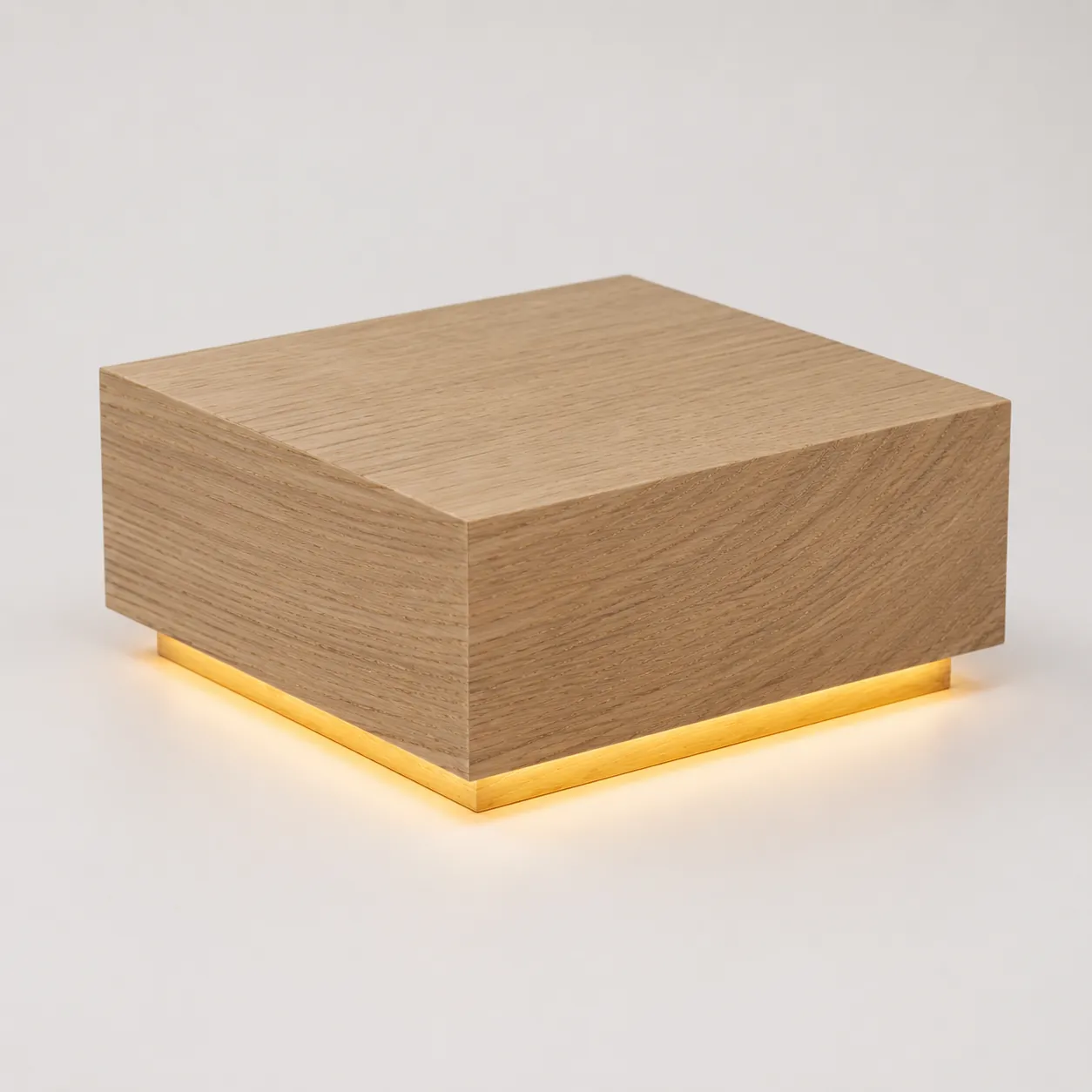
A button on the back, flush with the block: brush it and the light comes up. The cable is braided linen, no exposed plastic. The LED module slides out through the base, no tools, no glue.
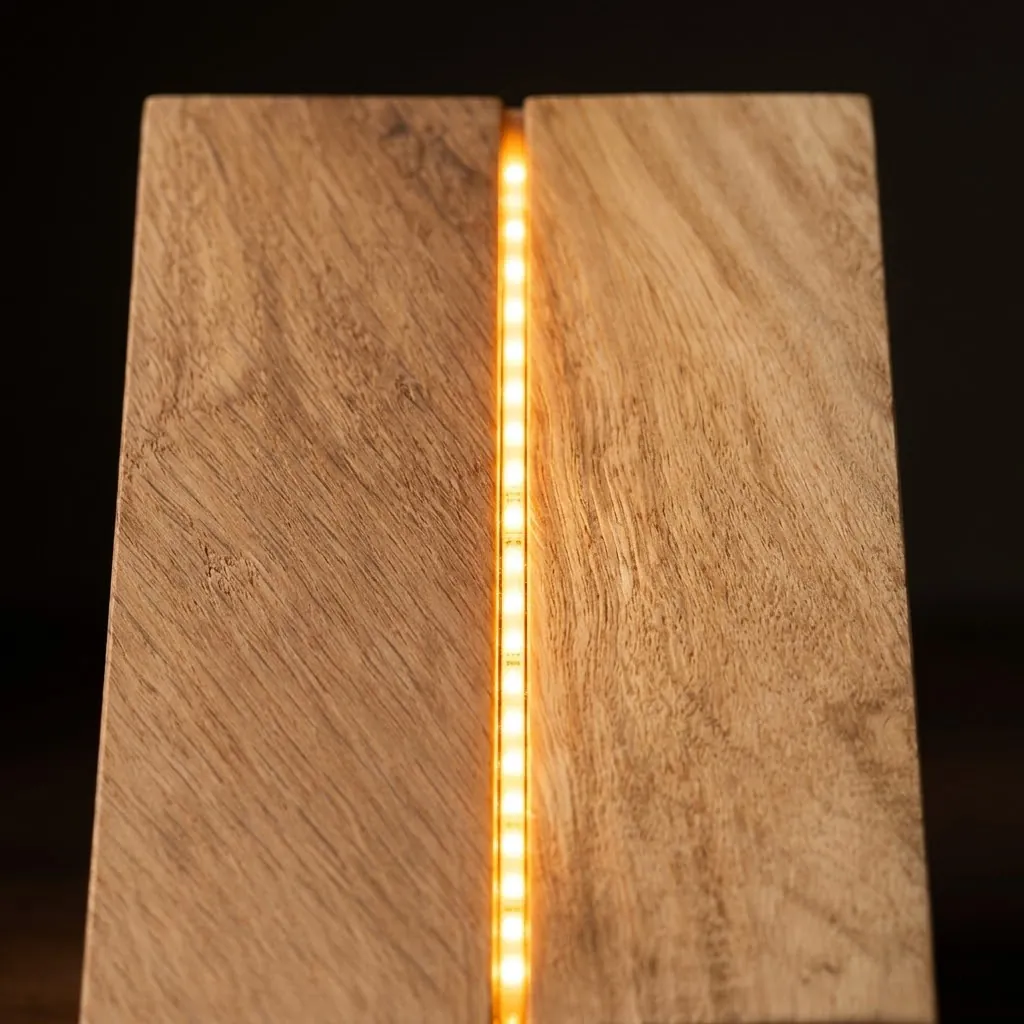
A warm line of LED: the wood keeps its honey, the wine keeps its red. An atmosphere rated for fifteen thousand hours. You never see it directly. You only see what it does to the wood.
Two views, seven dimensions. Everything else follows: the angle of the sloped face, the solid base that anchors the block, and the ⅝-inch cut the light comes out of.
Wide enough for the light to breathe, narrow enough that the source is never visible head-on.
The length of the sloped face sets how wide the fan opens across the table. Half an inch more and the light spills.
The solid foot lowers the centre of gravity. You brush the button on the back to set the light without the lamp moving.
Nominal dimensions, tolerance ± 0.04 in.
Cardboard packaging, wood-fibre padding: nothing to throw away, everything recyclable. Thirty days to watch it live; returns, no questions asked.
A soft brush clears it in ten seconds. Oil never enters the fault: the wall stays raw, and that is what gives the light its grain.
Yes. The module slides out through the base, no tools, no glue. The source is rated for fifteen thousand hours, or fourteen years at three hours a night. We keep spare modules in stock.
It will: that is how it breathes. The width of the fault is calculated to follow that movement. It may open by a fiftieth of an inch in winter, without changing the light.
The grain, the knots, the tone after oiling: no two oak blocks are alike. The geometry, on the other hand, is identical from piece to piece: the drawing fixes it.
Your cart is empty.